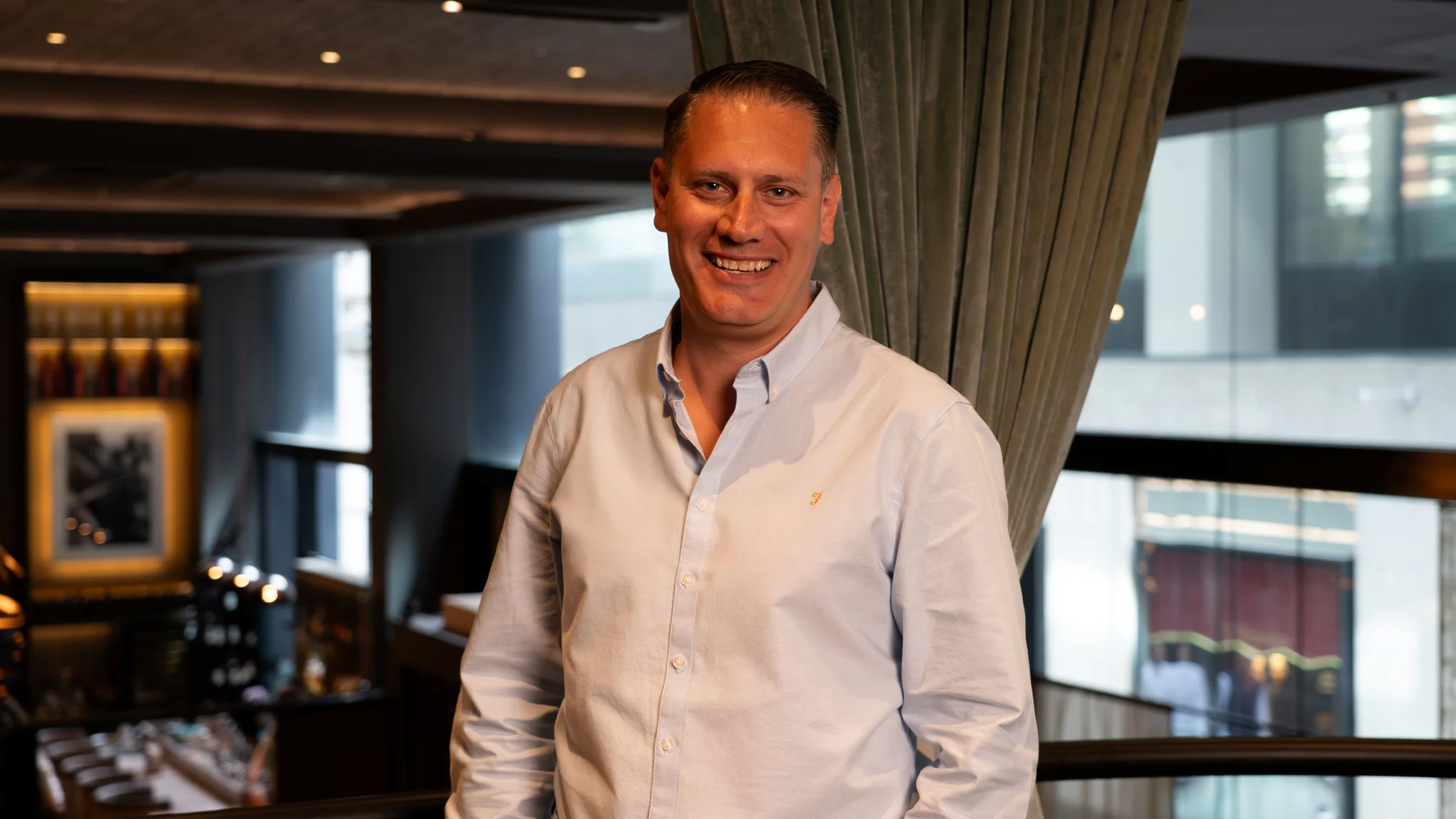

Ben Rowland from Eutopia Search sat down with Steve Manders, getagentiq.io, to talk through where AI is genuinely landing in finance functions right now, and where the conversation is getting ahead of the reality. What follows is his perspective on the state of AI adoption in Finance and Accounting today.
Every leadership conversation about AI seems to fall into one of two camps.
The first is convinced AI is coming for everyone's job. This camp reads the headlines, feels the pressure, and does nothing, because the scale of the threat feels too large to act on. The second camp is more composed. They'll wait until AI is proven, before committing any real investment. It sounds sensible. It also means their competitors move first, and by the time the evidence is in, they're playing catch-up.
Both camps look different from the outside. Underneath, they're the same mistake. Neither has actually looked at what their business decides day to day. They've started with the technology instead of the decisions it's meant to serve.
There is a third option, and it isn't about speed or caution. It's about building systems where people and AI make better decisions together than either would alone. AI brings speed and the ability to process volume. People bring judgement and context. The value sits in that combination, not in replacing one with the other.
Start with the decisions, not the tool
The instinct in most businesses is to buy something. A platform, a licence, an "AI transformation programme". The better starting point is much less glamorous: audit the decisions your organisation actually makes, not the technology it could adopt.
Map out what gets decided, how often, and by whom. Look for the decisions that are slow, inconsistent depending on who's making them, or expensive when they go wrong. Many businesses have never done this. When they do, they typically find that 60 to 70% of their key decisions are repetitive, light on data, and handled differently across the business. That inconsistency is where AI earns its place, not in some organisation-wide reinvention.
For finance functions specifically, that usually means one workflow: invoice processing, month-end close, reconciliation exceptions. Build a governed, machine-readable model of that single workflow, mapping the triggers, the handoffs, the approvals. Run it in observe-only mode first. The system watches, classifies and recommends, but nothing writes back to source systems and no payment gets approved by a machine. The point is to prove the concept before trusting it with anything.
Where it usually goes wrong
Three problems come up consistently. The first is that the data isn't as trustworthy as everyone assumes. Supplier records, purchase orders, invoices and approvals often quietly disagree with each other. You can't safely automate a decision without knowing which source of truth to trust.
The second is that the real exceptions don't live where you'd expect. They live in email threads, spreadsheets and the knowledge specific people carry in their heads. The actual rules a team follows when something doesn't fit the standard case are rarely written down anywhere a system could learn them safely.
The third is that controls usually aren't written in a form a machine can check. Approval thresholds, segregation of duties, audit evidence, escalation paths, all of it typically exists as institutional knowledge rather than as something a system can verify against.
There's a fourth challenge that isn't technical at all. AI tools have what's best described as a jagged edge: extraordinary at some tasks, surprisingly poor at others. A model might handle a genuinely complex reconciliation judgement well and then fumble something that looks trivial. Most failed AI projects come from assuming an even, predictable level of capability across every task, and then getting caught out the first time it isn't.
What a realistic first month looks like
Not a big-bang transformation, and any business promising you one should be treated with caution. The realistic version is one decision, one team, thirty days. Measure speed, consistency, accuracy, and whether your own people actually trust what the system recommends. The minimum viable version of this is rarely exotic: a structured workflow, a dashboard of scored recommendations, an automated exception digest. None of it requires a six-figure budget behind it.
Within a month, you'll know whether it's working. If it is, you have real numbers to justify scaling it. If it isn't, the cost is a few weeks, not years and a transformation budget.
What has to be in place first
None of this depends on the AI itself. It depends on data you can genuinely trust, a process mature enough that automating it speeds up something coherent rather than something chaotic, and controls documented clearly enough that both the system and the person overseeing it know exactly what "safe" looks like. It also depends on leadership willing to prove value on one workflow before demanding an enterprise-wide rollout, because that instinct to go big immediately is exactly what produces the paralysis and denial we started with.
The bottleneck was never AI's capability. It's whether a business understands its own decisions well enough to know where AI actually helps, and whether it has the discipline to prove that on one workflow before betting the wider budget on all of them at once. Get that right, and the technology takes care of itself.
The decisions organisations make about AI will inevitably change the roles people do, the skills they value and what they expect from the people they hire.
In the next piece, Steve Manders explores what that means from the other side of the equation: how AI is changing the expectations around careers, capability and employment, and what people can do now to stay ahead of that shift.